
By Carlton Wilkinson
I was confused about humanity, as many young people are. Confused about things like cruelty, injustice, the conflicts of morality, the existence of God, the inequities of human civilization. I had discovered Darwin only in college and the perspective of humans evolving like any other creature from lower life forms was reshaping my thinking. So in my confusion about humanity, I looked to the natural world for answers – and I became more confused.
Humans behave differently in human society from the way animals behave in the natural world. It seems to me that for all the hardships of life in the natural world, the lives of animals are much simpler and much easier to understand. The decisions they have to make are based on very elemental considerations — food, shelter, migration, mating, that sort of thing. These things and their responses are part of the landscape and the creatures move in harmony with the landscape, however beautiful or cruel that reality may be.
Humans on the other hand seem preoccupied with a whole lot of things that didn’t make much sense. Justice, progress, morality – morality was the biggest thing. Humans spend so much time judging people and people have a hard time making correct decisions in their lives, decisions that will allow them to make lead the best lives that they can. There is inequality among humans and cruelty and deception, ignorance and wisdom, bizarre threads of social status and tribalism. Money and made material goods as well as natural resources are a constant source of stress within human societies. And an overall celebration of the mankind’s achievements, its conviction in a sacred mission while divided over the true faith and the identity of God. The complexity of human life baffled me.
I saw in animals a reflection of natural order that I didn’t see in human society – a grace to the way things lived and died, either completely missing or completely overshadowed by internal chaos within the human species, and I couldn’t quite understand that. I remember visiting the Natural History Museum in New York – still one of my favorite places in the world – and seeing skeletons of Homo habilis, wondering what that life might have been like? In the museum too was a statue of the Mayan God of spring, Xipe Totec, who demanded human sacrifice and wore the flayed skin of his human victims as his uniform – implying a morality built, it seemed, on cruelty and so vastly different from any I had direct experience with that it was difficult for me to even comprehend.
I would see a squirrel gathering nuts on the lawn at the campus and think of purgatorius, the most ancient ancestor of the primate (and thus also the human) line – a creature similar to a squirrel, about the same size, on all fours. And I would regard the squirrel, and think, “Brother, how are we the same?”
I finally realized after grappling with this for a long time that my problem was my perspective – my methods. I was projecting human experience and expectations onto the natural world. I was looking at the natural world through the lens of human society. By comparing humans to animals I was invariably looking at animals of higher order intelligence – chimpanzees, primates, our close relatives. Even going further back than that, to primates that were ancestors in the primate line, I realized I was looking for evidence of compassion and cruelty, organization and individuality, the choices imposed by free will and their opposites. It left me dissatisfied. Viewing the world that way, nothing made sense.
I was an undergraduate. I thought I was smarter than I was and I hadn’t studied nearly enough to understand what I was trying to do. Still, given my limitations I made one good decision: As a thought experiment, I began to toy with the idea that maybe my models were creatures too close to humans. When a chimpanzee acts, it’s hard not to see that action as a corollary to a human action. But chimps don’t know that; they’ve never been humans and probably don’t care how humans behave. I realized that, rather automatically, I was projecting qualities onto my subjects that they didn’t possess and that maybe somehow that was clouding my vision.
For example, chimps will go to war against each other, will steal from each other and share with each other. The bonobo males enjoy a lot of sex with multiple partners and even children. I find some of that behavior abhorrent, pointlessly cruel or dysfunctional to the group. And some of it understandable – humans would behave the same way, right? And so I would find myself making the same human judgments about cruelty and dysfunction, evil and good. Looking at the natural world that way brought no clarity. Where in the world could one find the good – did it always have to be in concert with evil? Even in chimps, it seemed…
I was refusing to see them for what they were. I was looking to them for clarity about what it means to be a creature on this planet, but I insisted on dressing them up in human clothes beforehand. A chimp in my mental laboratory became, in a fundamental way, no longer a chimp. The behaviors I observed, or thought I was observing, in turn, only served to sustain my confused vision of human behavior.
My mistake boils down to this: I was looking at the natural world through the lens of humanity; What I needed to do was look at humanity through the lens of the natural world.
ENTER THE PLANT
In order for me to seek advice about humanity from the natural world, I needed to look at my subjects more objectively – but I had to admit that I was biased. I was automatically projecting human qualities.
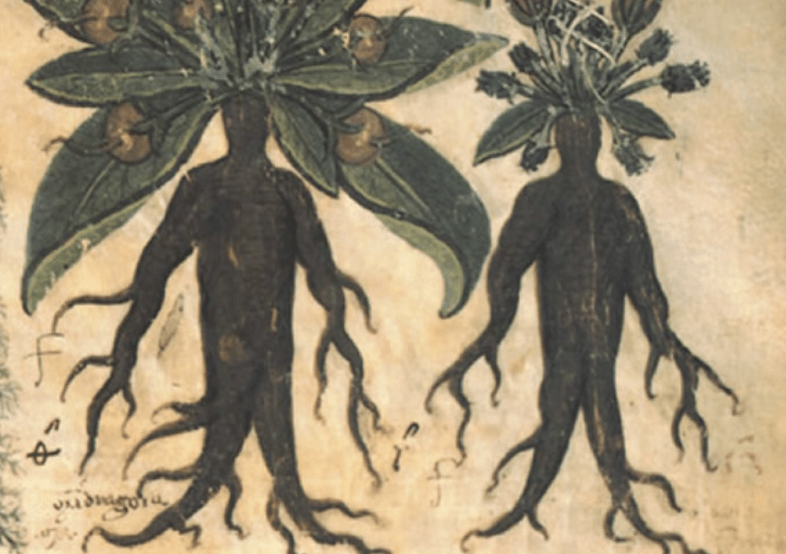
That led me to think, almost as a joke, that maybe it would be better to compare humans with some more ancient and alien form of life, some ancestor in the evolutionary line that would seem to have nothing to do with humanity. If you go far enough back in evolution you get to reptiles and fish and cellular forms – there’s no reason to not use any of them as an example of human behavior, as it could be argued we retain some of the influence of those lifeforms. What if I thought of humans as plants? What would that imply? The suggestion was a joke; I could have used bacteria or amoeba, but somehow “plant” sounded funnier and more robust at the same time. But, as it turns out, it was a really powerful metaphor. Not a perfect one, but one that provided me with important insights.
I started off trying to kill the idea by pointing out to myself that the differences between the life of plants versus the life of humans were too great to make an adequate comparison. But that wound up only proving that the metaphor worked.
For instance, people can move around freely, make choices about the nourishment they take in; if they don’t like one spot they can move to another. Plants can’t go anywhere, they can’t just make a decision to move, to uproot themselves. They’re not only rooted to their place but rooted to the nourishment they receive and the genes that they receive in the formation of their seed, the conditions that exist around their rootedness. They can’t just decide to undo all that, or any of it. Whether they flourish or not is almost completely out of their hands. It’s a factor of the environment and the conditions under which they were created and under which they find themselves rooted in a particular spot.
But having thought of that, I immediately realized that humans are exactly the same way: rooted in the conditions under which we were born. I can’t just suddenly decide that I’m going to be born Asian, or that I’m wealthy or that I’m poor. I can give away all my money, but even that doesn’t give me the perspective of someone who was born poor. My perspective is, in large degree, an inheritance of the particular conditions under which I developed as an individual. I can’t undo the conditions under which I was born any more than a plant can undo the conditions of the soil in which it is rooted and in which it is forced to grow and die.
OK, so that didn’t work to negate the fleshy plant metaphor. Let’s try another approach: there are too many variables that go into the development of a human being to allow comparison with a simple plant to make an adequate comparison. Well, let’s see.
First of all, what’s wrong with an experiment that reduces the number of variables, to study a few? Scientists do that all the time. Second, there are an incalculable (to me, anyway) number of variables involved in the existence of any living thing, including plants.
You can put two plants next to each other in the garden and one of them will flourish while the other of them will not. One of them will bear fruit and one of them won’t, or one’s fruit will be delicious and the other’s won’t be any good at all. The conditions may even appear to be exactly the same for both, but for one reason or another one plant will do well and the other one will not. There are too many variables at work for you to be able to entirely predict how that’s going to happen.
So rather than undermining it, this actually made the metaphor even more compelling. If you can’t consistently predict the behavior of plants, how can you expect to predict the behavior of humans? Even though you have the same information as another person, and superficially the same set of experiences, that doesn’t mean that other person is going to make the same decision as you. There are too many variables at work in the conditions in which they find themselves, that have to do with where they were born, how they were raised, the environment that is more or less handed to them, the thought processes that are formed from infancy are inescapable – even perhaps completely inescapable.
We like to think that with the right education or the right set of experiences that there are possible changes of mind, behavior, thinking, what have you. But we don’t know for certain how true that is. Certainly most people, when confronted with something that’s truly paradigm shifting, are not going to necessarily be able to leap at that new idea. You have to have it carefully prepared for you, you have to be led to the spot, perhaps many, many times, before it becomes clear to you that new idea is the truth – before you even have the opportunity for clarity.
Let’s say you have a line on a map connecting point A and a point B, and you have a point C, laying outside the line. You meet a person who has never seen the map, who has been traveling from Point A to Point B through Point C for their whole life. You can take them by the hand and show them that the distance from Point A to Point B is much shorter if you go directly, without traveling through Point C. You can show them that and they can even understand it, and yet sometimes they will still travel through Point C to get to Point B. They are, for whatever reason, simply not prepared to accept the new information or at least to let it impact their lives. Certainly not every person will reject the new information, but in many, many cases, they will. It depends a lot on our relationship to the information, on how deeply it is rooted to our understanding of the world and our self-identity. That’s almost impossible to predict. Even if I were to try to predict my own reaction, I would find it hard to be accurate. To predict someone else’s is harder by a factor of a lot.
You can extrapolate that to any sort of experience or opinion or reasoning – the sum total of their experience, their identity, their routines and expectations, is necessarily going to weigh more than your evidence to the contrary. And most of that sum total is beyond their control – it represents the soil in which the plant is born and spends its entire existence. And it’s certainly beyond YOUR control, in your attempt to comprehend or predict the behavior of some other person. It’s impossible, in the end, to completely understand another human being’s experience, although we can make broad inferences.
Here, my later experience with semiotics and the study of language have helped to round out the picture. Semiotics demonstrates how words have thousands of shades of meaning unique to each individual. Each recipient of an idea redefines that idea, recasts it in terms of their own experience. Let’s say you’re looking for your house key and you ask a friend for help. You describe the key for them, and they may understand enough to remember it and recognize that you and they are referring to about the same object. Yet their impression of the key, their understanding, will be subtly different from yours if not markedly different. In a severe case, it may even be different enough to make them no help to you in finding it.
On a more profound level, we have to accept also that human language is a human technology that doesn’t exist as such in nature and thus has a limited applicability to the aspects of reality. The simplest evidence of that is to show how advanced equations compare with language: two different views of reality. Language can acknowledge mathematics, but can’t duplicate its communication. Similarly we look to the arts, including poetry and music, to express some of what can’t be expressed with language itself. (Poetry invokes elements of music and ritual, alongside references of simple imagery and thus requires language but reaches beyond its borders.)
Language, mathematics and art have a lot of commonalities which I intend to explore. But taken individually or together, they represent features of the plant – like a red flower and thorns on a rose, perhaps. These features are beautiful, useful and unique to one type of plant. Other plants have flowers, but the rose flower is identifiable as only belonging to the rose plant. The rose can’t expect other plants that are not roses to have the same red flowers and thorns.
All of that feeds into this understanding. I had tested my metaphor and found that it opened a window of clarity onto behaviors that had previously confused me. It forced me to change my perspective – in small ways at first – from a human looking at the natural world to, as much as possible, the natural world looking at humanity.
And this became my mantra: Humans make more sense when you think of them as plants.
MORALITY
So what happened next was this: As I applied this metaphor to society, my conundrum of not being able to understand how humans fit into the natural order began to just cave in on itself. The simple metaphor collapsed a whole host of obstacles blocking my view of humanity. It turns out that the structure of human society is so profound that, as members of that society, it clouds our experience of what is natural and what is human. So much so that we don’t understand ourselves that morality for instance is a thing that is not found outside of human society. Or that any of the concepts and ideas wrought by our use of language don’t necessarily exist outside the species. They are evidence of human technology – artifacts of humanity.
This idea of morality is, for humans, just a code of conduct that allows human society to function at a more efficient level. As a concept, a thing to be concerned about, cruelty may not even translate across species – or perhaps only in some cruder form, in which its indistinguishable from other anti-social behaviors.
As a human technology, an adaption, morality makes sense as it works to make the species more efficient as a social unit. You need things, possessions, both to attract a female and to keep alive your family unit. If you’re not robbing from someone else, then others are less likely to rob from you and you’re possessions are safer. If helping others means others honor your contribution and help you in return, society as a whole functions better, and is able to provide more for the greater number.
Almost anything that is good for the prosperity of the tribe is good for the proliferation of the species (war can be a pretty notable exception, though it’s also not totally a contradiction). And that makes societal cooperation, of which morality is an example, a trait favored by natural selection. Groups that are better at cooperation will survive.
This isn’t a new idea, but something anthropologists have known for a long time now: Cooperation is one of the things that sets humans apart from their closest relatives. Greater degrees of cooperation among primates exhibit greater dominance of their natural habitat. It’s clear that humans are incredibly good predators when they hunt in coordinated groups. Likewise they grow more food when they work together. That kind of coordination and agriculture and all the rest that gives us an extraordinary advantage. Morality is simply vehicle for that cooperation. As a ritualized code of conduct, it allows human society to confront the natural habitat in a way that allows the species to dominate.
We don’t know exactly how ants coordinate their activities or why. Would it make sense to say ants have an intrinsic morality driving them toward some greater social good? And maybe biblical laws that create a societal code of conduct? That would seem absurd. By turning that around, would such cooperation among humans, seen by another species, imply anything other than a successful behavioral adaptation? No. In this light, our understanding of morality as a spiritual pursuit is actually a distortion of inherited evolutionary conditions – distorted because of our perspective as the source from which the idea emanates.
On the other hand, you could redefine spirituality to mean the union of humans – the collective. Assuming that, morality as a cultural code of conduct can be rightly based on how it sits with the collective human synchrony and the expectations and goals of a society – ignoring for the moment the explanations and stories distinct for each culture, and admitting the different moralities that are created for different societies.
This, I’m realizing only as I edit this, is roughly what my Dad believed. He was a Presbyterian, a deacon at the local church, taught Sunday school. But he was also something of an existentialist – a dichotomy I always found a bit confusing. When I challenged him about biblical accounts of miracles or the creation myth, he would only say, “There’s nothing wrong with bedtime stories.” He admitted the contradictions toward a larger goal of doing good and taught me that religion doesn’t have to be perfect to serve a greater purpose. He believed that because religion is made of people, and people, he knew, weren’t perfect.
I said something to him once about the nature of God, and he said, “I think that if you took all the souls of all the humans who ever lived and you piled them on top of each other, that would be God.” It took me a long time to understand that. But now I’m sure he was justifying his religion as being an expression of morality, a practice of belief that leads us to be good to each other and for each other. For that function, he wasn’t concerned about the role of humans in nature. He didn’t need a well-defined God, or a clear expectation of Heaven or Hell. He only needed an acknowledgment of the collective human spirit and a sense that morality’s compass could be found in that spirit. The bedtime stories sometimes helped in that respect.
Morality – any morality agreed on by a culture – functions as an expression of the human collective. It’s effectiveness, I would say, is determined by prosperity and happiness of the community it serves. From an evolutionary standpoint, happiness doesn’t matter, and prosperity only matters to the extend it increases the ability to produce viable offspring. But once the success of the species is assured, then I think prosperity and happiness become the logical goals of any cooperative behavior, and cultivating cooperative behavior is the actual goal of any morality.
LANGUAGE
So when you look at human society, you see that far from being separate from the natural world, humans are simply part of the natural world – it is the sea that we swim in along with all the other creatures. But what we see as the natural order is clouded by our perspective as the dominant species – particularly how it applies to us. Our understanding of our situation is limited by human-centric perspectives that basically admit no other perspective; the human constructions that we use to interact with each other and the world perpetuate that view. These include morality but more importantly language itself.
Language is the underpinning with which humans have constructed almost everything about humanity and almost everything they know about the world apart from humanity. We are so dependent on language now that it dominates all of our thinking. We perceive the world through the lens of language and literally cannot conceive of living in the world, or conceive of the world at all, without it (though perhaps we could be trained to do so). Language dominates the five senses, our internal life and all of our experiences, both internal and external; we know what we know largely through words, through descriptions we tell ourselves. Even our emotions, our most intimate physical experiences, are filtered through language, to the degree that we often don’t try to describe emotions except in prescribed ways – in that respect we use words like Hallmark cards, off-the-shelf substitutes for more honest words that we can’t easily find. We’re taught language from infancy and we don’t have any other way to relate to the world.
Language is an adaptation of earliest humans or proto-humans – a runaway adaptation if you will, like the peacock’s tail. It has separated us from the natural world in the same way that the peacock’s tail has separated it from the life of other birds. While still a bird, the peacock’s life bears little relation to the life of other birds because it can’t fly very far; it has considerable weight to drag around. The attractiveness of the tail feathers motivates mating, but the adaptation wasn’t checked anywhere and exploded into the righteous, limiting plumage we see today. Given the right conditions – a predator that the peacock would suddenly have the need to outrun or fly away from, for instance – it would no doubt fare badly.
Likewise in humans, language is a kind of runaway adaptation that has allowed us to do all kinds of incredible things but has separated us from understanding our place in the natural order. Language isn’t a bad thing – it’s ingenious and incredibly useful – but the separation from the natural order is a bad thing. And it’s coming home to roost now because that runaway adaptation has produced all manner of other technology that’s literally changing the environment out from under our feet and could in fact make the world or at least parts of the world uninhabitable for humans. That’s no longer in the best interest of the species yet we can’t seem to stop doing it. Our ability to remedy our situation would of course also rely on language, but our inability to understand or properly address our situation has a lot to do with the human-centric view of the cosmos and, in turn, this runaway adaptation of language.
GOD
As a result of putting morality into perspective, the fleshy plant theory became a kind of a religion, or anti-religion. It highlights the degree to which the thinking of humanity has anthropomorphized – we’re totally anthropocentric, totally fixated on humanity itself. All of our ideas about the natural world spring from within humanity itself. It’s like we’re inside a dark-glass bottle and we’re describing what’s happening outside – more precisely, we not describing “what’s happening outside” but “what’s happening outside as seen through the dark-glass bottle.” That’s an important, limiting distinction. The bottle is language, a human construction. In order to break that, we have to find a way to understand the limitations of language as a mechanism and a way to perceive the natural world, or to get a glimpse of the natural world as it would be without that glass. Shattering that dark glass allows us to see our place in the natural order more clearly.
Some aspects of religion – the organization part of organized religion – are just an extension of that phenomenon. They’re language-based mechanisms for social order, full of murky, language-based assumptions about the functioning of that part of the universe that lies outside of human influence. We’ve learned, through language and mathematics and experimentation, that there is no god making it rain, or throwing thunderbolts. We know that heaven doesn’t physically rest above the clouds and that the sun is not a god in a chariot riding across the sky. But we aren’t prepared to give up on those anthropocentric interpretations of divine control and appeals to a higher justice (by the way, another human construction).
As it relates to notions of God specifically, the fleshy plant theory doesn’t assume God doesn’t exist, but that our definition of God is man-made and not the other way around. Once we’ve accepted that language, morality, justice, society, our very way of conceiving the natural world, are all man-made constructs, then we see that we are part of the natural world and those things are not universals but aspects of our species, the same way flowers, fruit, leaves, and growth tendencies and behaviors are aspects of a plant. In order for God to be what we want him to be, an overlord, creator and ultimate judge, he has to be something OTHER than what we can conceive – he can’t be part of that human toolkit. To be a God of all creation, he must defy our human ability to describe him.
The concept of God as he appears in the Bible is self-contradictory: If a description of God can be contained within human language, then it’s got to be wrong. He’s another piece of technology, an outgrowth, like cars, or like morality or like television or entertainment – an outgrowth of this runaway adaptation of humanity that projects humanity onto everything it sees.
If on the other hand, you want to suggest that the attempt to create God in our image is based on the existence of an actual God, a real creator that created all the natural world and is safely beyond the human ability to understand, then you have to completely erase your definition of the God that springs from human language because he’s been conflated with a bunch of human-centric propositions, like morality and justice, that have nothing to do with the natural world but are only relevant within human society. What you have to do is sweep that aside and focus on what God would be if God were only a natural creature, and that might give you a more realistic insight into the extent and existence of a super-natural God – it might. But even there, you find you have to transcend the limitations of the natural world (which are beyond the limitations of humans) in order to come to find a satisfactory perspective.
I read a science fiction book, Perdido Station, where one of the creators of the world and a spinner of people’s fates is an actual, giant, hideous spider, with an absolutely unfathomable sense of humor and a bizarre view on the details of human destiny. That actually seems more reasonable to me than a human god. You could use any species as a model and get wonderful insights. Personally I think the best candidate for God would be something like a single cell, a monopole organism that has no interaction with its own environment – it could have no environment other than that which it had created – and that exists in the background of all living things and all creation. But that conjecture, like all possible, is limited by language and my experience and knowledge of the natural world through the lens of language.
Spinoza’s view was better, building on his knowledge of science, his insights into logic and his unflinching perspective on natural human biases. Spinoza believed God to be a foundational, indivisible substance, from which all else in the universe was made, including ideas. God was some kind of what we would today call a quantum particle that formed the basis of everything else. (But since he extended “everything” to include ideas, his notion of a God substance is quite beyond the reach of particle physics as we understand it.)
But let’s just say there is a God, a god that you can rightly worship. Then it has to lay outside of human thinking. The very concept forces that conclusion. Some religious texts have approached this idea, the Bhagavad Gita in particular. When Krishna reveals himself in his ultimate form, he is inconceivable to Arjuna. Arjuna says, I just had no idea. I had no idea.
How rashly have I called you comrade, for so I thought of you. How rashly said, “Hey Krishna, hey Yadava, Hey comrade!” Little did I know of this your majesty. Distraught was I … or was it that I loved you? Sometimes in jest I showed you disrespect as we played or rested or sat or ate at table, sometimes together, sometimes in sight of others: I crave your pardon, O Lord, unfathomable, unfallen!
If there is a god, then the experience of it has to be that way: we see something that looks like God and we act like we know, but we can’t actually have any idea. The real thing has to be the god of all the universe – the natural world that we know and that which we don’t – and we have to recognize all of mankind’s accomplishments not as the embodiment or not the highest pinnacle of God but as a tiny blip within the natural order. A God that fits neatly within human-centric constructs is not God, but a piece of our own technology, a human invention. All human inventions belong to humanity, humanity belongs to nature – if God exists, nature belongs to God.
You have to enlarge the view of what God is then, if we’re going to talk about God at all. And really, if you’re just talking about the natural order itself, the order of the universe, the planets and the natural world, then that seems a good-enough starting point. Creation, natural selection, the evolution of the planets – an appropriate place to start to consider what God might be.
RELIGION
So this is one of the biggest problems I have with most religions, especially Christianity. It seems to be based entirely on words and descriptions and thought patterns that are anthropomorphized and terribly oversimplified and judgmental where the natural order is not. And all of those things, our view of God has become clouded by language which is a human technology developed for human reasons.
It’s not an accident, as others have pointed out, that we refer to God as Lord, and we’re the servants, or a shepherd and we’re the sheep. These are ancient ideas – the king and his subjects. These are political ideas, occupational ideas, drawn from experiences in human society. The appeal to God for intervention is an extension of the quest for justice, which is itself a human construct to contain territorial feuding and make society more constructive and efficient – no parent wants both Cain and Abel to die. So justice intervenes and sends Cain into the wilderness for the crime of killing Abel. The parents won’t see him again, but at least he’ll be alive somewhere. The concept of justice is important in human society and part of the network of successful human concepts that we impose onto great Everything Else.
Problem is, the natural order as a whole doesn’t recognize those concepts. The idea of heaven and hell belong to humanity and are not reflected elsewhere in the natural order. If you need those as a basis for your religion then your religion is flawed, stuck in an anthropomorphized – and therefore, at least limited and more likely completely incorrect – view of the universe.
The natural order of the universe doesn’t operate according to man’s principles. We did not invent it. The order of society is based on what’s good for the tribe – this is an innate human attempt to ensure the best practices for continuation and proliferation of the species. This is obviously not what we see in the natural order outside of humanity. What’s good for the human species isn’t necessarily good for any other – the fate of the passenger pigeon, the wooly mammoth and many other species bear that out.
There are many, many aspects of human society that are unique to human society in the same way that anthills are unique to ants. There are parallels in other species but never quite the same thing – each species has to do what it is in its nature, what is appropriate, in the same way that a peacock’s feathers are appropriate to the peacock and its set of behaviors.
FREE WILL
So this takes us from the realm of society into the realm of the individual experience, which is like being in a bottle inside a bottle. The outer bottle is human language and its subordinate constructs, which separate us from the natural order that would otherwise be all encompassing.These have evolved over centuries and change from civilization to civilization – the morality of the Maya was not the morality of the ancient Chinese or medieval Europeans or modern Christians.
The inner bottle separates each individual from every other. We’re peering through both of those to see beyond the human species, to see its place in the natural world. There’s a third lens, as well, if you’re looking for God, which is the border of the natural world itself – because God would have to be larger and all-encompassing. Perhaps there are more, but if you’re looking for God, now you’ve got to go through at least three of those dark lenses to find him.
So the fleshy plant theory isn’t a religion or an anti-religion, but is really more of a metaphor in that we’re rooted within the biological and social conditions that have formed our consciousness, and the environmental conditions that have framed our experience of the world. As individuals, we’re rooted in those conditions in the same way that plants are rooted in the soil. We can’t simply undo them, we can’t simply change those conditions in order to come to a new sensibility or a new understanding of the world. That raises the notion of free will.
Spinoza famously compared the human understanding of free will to the experience of a thrown rock in mid-flight. The rock, experiencing its tendency in a certain direction, he said, would believe it has free will. I’m not quite that cynical about it, but a lot of scientists, cosmologists and physicists would back up Spinoza’s view. Time might be entirely an illusion that says more about our physical experience than about reality or the universe itself. There’s nothing necessary in the laws of physics that would indicate that we have to have free will or that we do have free will. And there’s quite a lot of evidence to show at least on an individual basis that we don’t – at least not very much.
There’s a book that I have called “Free Will” by Sam Harris that argues Spinoza’s point pretty precisely. He makes a really strong case for the idea that we really don’t have any free will at all, or very little. But also that that doesn’t absolve us of the responsibility to use the illusion of free will that we have to the best of our ability.
And I think that’s where I come down. With the fleshy plant theory, we assume that the conditions in which you are planted will pervade your entire life, the constraints of being an individual human inside a bottle inside a bottle inside a bottle. You’re handed that at birth – your family, psychology, genetic makeup. You’re even handed a set of challenges in your life that you can’t predict or avoid. Because they’re unforeseeable. But they’re coming.
And yet there are decisions we can make and actions we can take that do seem to indicate that we have free will on kind of a local level. We’re free to choose to drink or not drink, marry or not marry, walk or take the subway. Maybe those are illusions and we’re guided entirely by external or prescribed forces we don’t clearly recognize. But since we can’t deny it, let’s embrace the illusion. That small amount of free will, if it is indeed free will, is a critical part of every unfolding life. So I’m not prepared to dismiss the notion of free will altogether. But I see it as one aspect of the plant – a thorn, a leaf, a flower, a fruit – which is otherwise rooted and, in the free will department, featureless.
There is a wonderfully pathetic scene in “The Little Prince,” where the main character is saying goodbye to his love, a rose, who remains rooted in her spot on the Prince’s homeworld, the asteroid B612, as he goes off on travels. She is sad to see him go, but in a fit of pride, reminds him that she can take care of herself. She “naively showed him her four thorns” and then told him to go.
For she didn’t want him to see her crying. She was such a proud flower ….
Free will is to humans what those four thorns are to the proud flower.
In fact, those physicists and cosmologists often point out that our experience of the universe is unfolding, but that the universe itself has already unfolded. Trapped in the flow of time, we’re just simply experiencing what has already been dictated. It’s a view that bears out somehow, in the mathematics. It may be true, and yet – we are left with the illusion of free will. And here’s the real kicker: What choice do we have except to use it? We don’t have the free will to reconstruct reality, so we have to work our way through with what we have, illusion or no.
The philosopher Nick Bostrum argues that the universe is a giant simulation – a computer game. The argument being that if humans live long enough to create simulations of humanity’s evolution, then there would be countless numbers of those and only one of the original and therefore, statistically, we are more likely to be living in one of those simulations than in the original. He argues the point very well and I’m not qualified to say whether it bears out. But I will say that it doesn’t change anything about my view of free will or anything else: we’re left with the reality we have, regardless.
Neither of those scenarios – that of the cosmologists who say the universe has already unfolded and only our experience of it allows it to believe it is unfolding, or Bostrum’s idea that we’re living in a computer simulation – say anything about our current experience. If you give up and you don’t have free will, what are you giving up? Let’s say I decide to stop living my life and I’m just going to sit and let things happen. What am I giving up if I didn’t have free will in the first place?
Perhaps reality is already complete to the last millisecond of the universe and it is only my conscious attention, tracing through each moment’s prescribed scenario, that makes it seem unfolding. Or perhaps, my life may be something like a Disney park thrill ride, in which I am experiencing it as its happening but am totally strapped in and have no free will whatsoever to do anything other than experience it; or may be it’s like a fun house, where I have some liberty in my responses but have to follow a pathway along which are prescribed sets of experiences and limited choices; or maybe a playground where I have more control over which experiences I want, within the apparatus arrayed around the park. Any of those might be true, or some combination.
But in all of those scenarios the perception is that, given the position in which we find ourselves, we are free from moment to moment to choose our path forward, to a certain extent. If you challenge that – nothing happens. There’s no control experiment, so your life still follows some course that may or may not have been preordained. So in that case, a conception of free will amounts to belief. But, at least in this case, it doesn’t much matter what you believe – in every scenario, the reality of the experience will be absolutely the same.
You might be concerned about God. God could be expecting you to live up to the standards he has set – to choose wisely. Or God could be regarding his creation, the universe, as a giant map that is completely unfolded, in which case your choice doesn’t matter. Or God could be the creator of the computer program that controls your life. The outcome in terms of your experience is the same in all three. You pray for a miracle and the miracle occurs; would it have occurred if you hadn’t prayed? There’s no way to know. (It is, however, hugely satisfying to see a thing happen that you’ve fervently desired to have happen. So faith may provide an advantage for your experience of the world regardless, provided you can also accept the disappointment when it doesn’t go your way.)
There is a possible caveat here. With regard to Bostrum’s theory, there is one difference: we should be able to find a way to test it. Religious beliefs always find a way to wriggle around a test or continue past the point where one test proves them false. Beliefs change to accommodate new conditions that defy the test, for instance, or one can chalk up one’s beliefs to the ultimate “mysteries of the soul” or some such vague rationalization. A computer simulation on the other hand should be more concrete with a discoverable structure. But, since we would exist as code within the simulation, one would suppose it should be impossible for us to see the code for what it is. In all likelihood, we should be programmed to be unable to do that effectively. Or is it that we simply haven’t looked properly? Again, is it free will? It seems we have no choice but to act as if we have a choice and hope to arrive at an answer someday.
So, from my perspective, from the perspective of being here, the question of free will remains active and the experience of it, identical, in any of those scenarios. We have the free will on a local level, or the illusion of free will, which are the same thing, to experience the world as we choose to, to a certain extent – to the extent that that experience doesn’t deny the conditions that were handed to us when we were born.
Rita Scardino, a fellow student at Trenton State College when I first came up with these ideas, commented that the fleshy plant theory sounded like a great big way of saying, “It’s not my fault.” There’s some truth to that, I must say. But what I was looking for at that time was not a way to say “it’s not my fault,” but “it’s not YOUR fault.” Yours, I mean, not Rita’s necessarily.
When I was looking at the rest of the world, I was saying, why don’t people understand one another, why can’t they agree? As the facts say, “thus,” why can’t they agree, “thus”? But they can’t – it’s not just that they won’t; they literally can’t. Not always, in any case. Even when it might be best for themselves to choose a different path, it may be impossible. They will diverge based on their own understanding of their experiences, which in turn are based on inescapable conditions that form the soil in which they are planted.
 Build Intuit