The intersection of semantic categories and sensory-motor areas suggests a unified mechanism for processing action, perception, and meaning. How we position ourselves in the world directly shapes our thinking and language. Designing a situated AI semantics model that can flexibly navigate complex, real-world contexts presents significant challenges. Such a model must not only process shifting lexical relations but also adapt to dynamic environments in real time, reflecting the ecological interplay of interaction, orientation, and meaning.
Approach:
Orientation Grammar: A semantic framework that focuses on dynamic, context-driven shifts and comparisons in meaning, emphasizing adaptability rather than fixed definitions.
Quadranyms: Hierarchical units that structure meaning across broad orientations (e.g., expansive vs. reductive) and evolvements (e.g., subjective vs. objective) for context-sensitive responses.
Key Concepts:
Intensions: Conceptual properties.
Extensions: Real-world instances.
Dimensions: Dynamic Orientations.
Application: Used for systems like Large Language Models to adjust orientation and generate contextually relevant, responsive outputs.
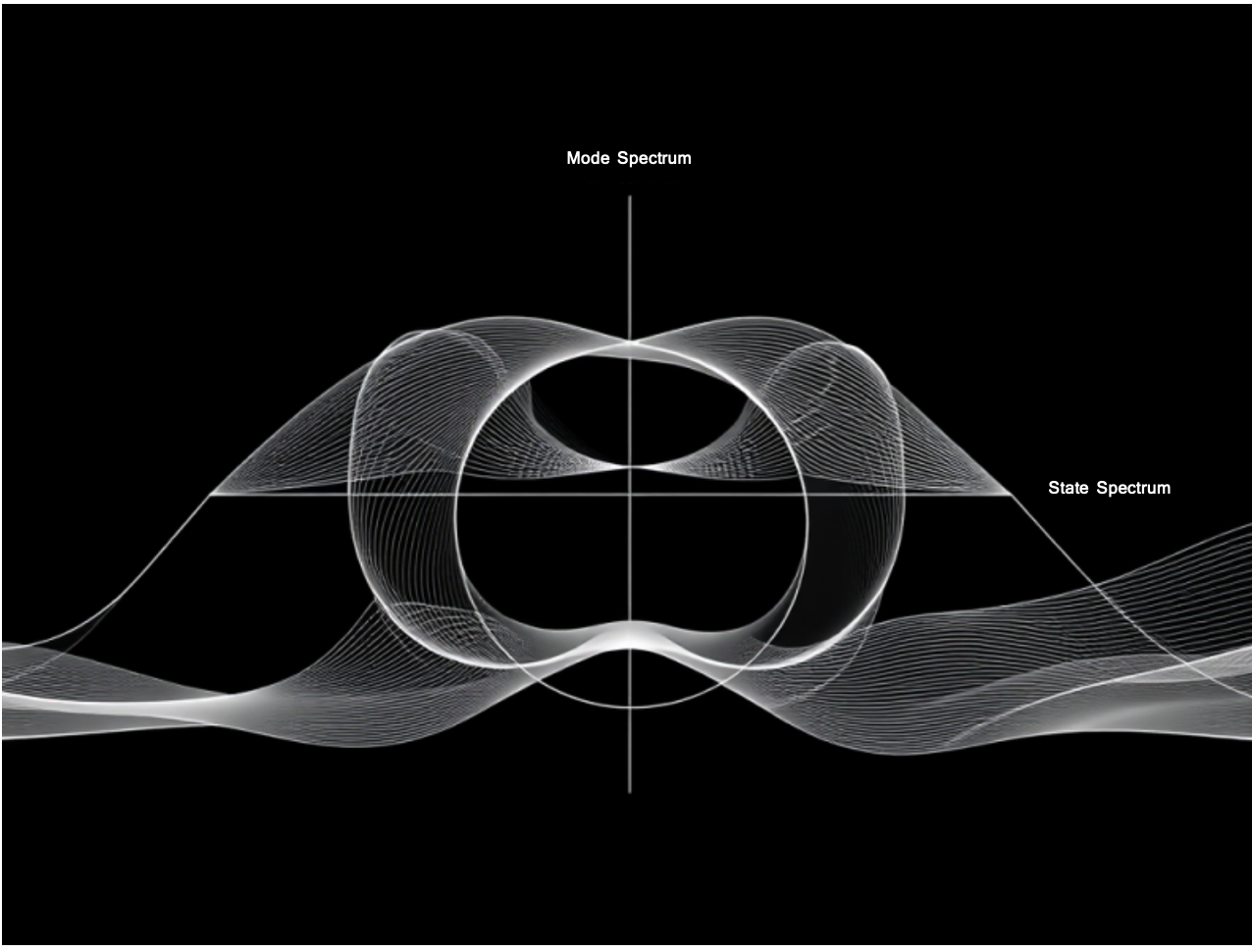
This is the Dynamic Quadranym Model (DQM):
It is about building a completely different kind of artificial intelligence—one that is grounded in a continuous, dynamic process of orientation to a world teeming with meaning, rather than one that simply computes a static representation of it.
The DQM provides a framework for guiding systems like large language models (LLMs) by aligning current states with potential futures across various layers. It uses an orientation grammar to ensure that outputs remain contextually coherent and responsive to real-time situations.
The purpose of the DQM is not about clarifying or defining the meaning already present in the text—it is about orienting to that meaning in a dynamic and context-sensitive way. While traditional natural language processing (NLP) systems, like transformers, excel at extracting and representing meaning through embeddings, sentiment, or syntax, the DQM focuses on situating the agent within the context of the meaning.
Key Implications for Semantic Systems
The DQM offers insights into designing (or supplementing) natural language process (NLP) systems by managing overarching themes, situational responsiveness, and adaptive context-awareness:
Quadranyms as Scalable Units of Orientation: Inputs are organized hierarchically into quadranyms, which guide natural language process systems by providing broad orientations and specific, context-driven orientational responses.
Quadranym Semantics: Exchanging a package between two people involves two actors, a means of transaction (e.g., a handover), and a trajectory (from one person to another). This forms a transframe, and the dynamic quadranym functions similarly. A quadranym consists of four orientations: a subjective state (self), an objective state (other), a possibility (the package), and a resolution (giving).
Intensions, Extensions, and Dimensions: Traditional approaches focus on intensions (conceptual properties) and extensions (physical instances). The DQM introduces dimensions as a third aspect, framing meaning through dynamic engagement with the world, creating a Dynamical Context where orientational responses are continuously adapted to the situation.
Orientation and Responsiveness: Meaning for the DQM is an orientational process, shaped by the agent’s goals and context. It shifts from passive representation to active, goal-oriented responsiveness, where meaning is framed as a goal, not a given; adjusting orientation based on real-time feedback.
Implications for AI and Cognitive Systems
The DQM is particularly relevant for systems requiring real-time situational alignment, such as conversational agents, decision-making systems, and context-aware robotics. It provides a flexible, scalable approach to guiding responses in human-centered environments.
Summary
The DQM shifts how AI systems process and respond to situations by moving between orientations rather than relying exclusively on fixed semantic meanings (word associations). This transition turns meaning into a dynamic, actionable process, prioritizing context, adaptability, and responsiveness. It allows AI systems to engage with the world as active, responsive agents, dynamically adapting to ever-changing contexts.
By emphasizing orientation over meaning, the DQM represents a significant departure from traditional semantic models, enabling fixed meaning systems to interact with contexts and real world environments in more human-like ways, with real-time situational awareness.
(Semantic Framework: Orientation Grammar and Word-Sensibility Theory)
In these posts, we will explore word-sensibility (Q) and its potential applications in artificial intelligence and natural language processing.
We welcome an open dialogue on a range of systemic perspectives, including enactvism, cybernetics, process philosophy, phenomenology, and many other topics related to AI, nature, and human experience.
We look forward to your insights and contributions!
Word-sensibility (Q), as presented, is a theoretical framework. While it offers insights into cognition, emotion, and dynamic systems, its application and assertions about the real world remain conceptual and speculative. The Q model is designed to simulate how meaning and semantic orientation might be structured in both human and AI systems, but it is not intended to reflect an empirical or deterministic representation of reality. Readers should approach the model as a conceptual tool for understanding complex interactions rather than a definitive explanation of real-world processes.





 Build Intuit